Launch offer — valid today only

📄 Digital book in PDF · read it on your phone or print it

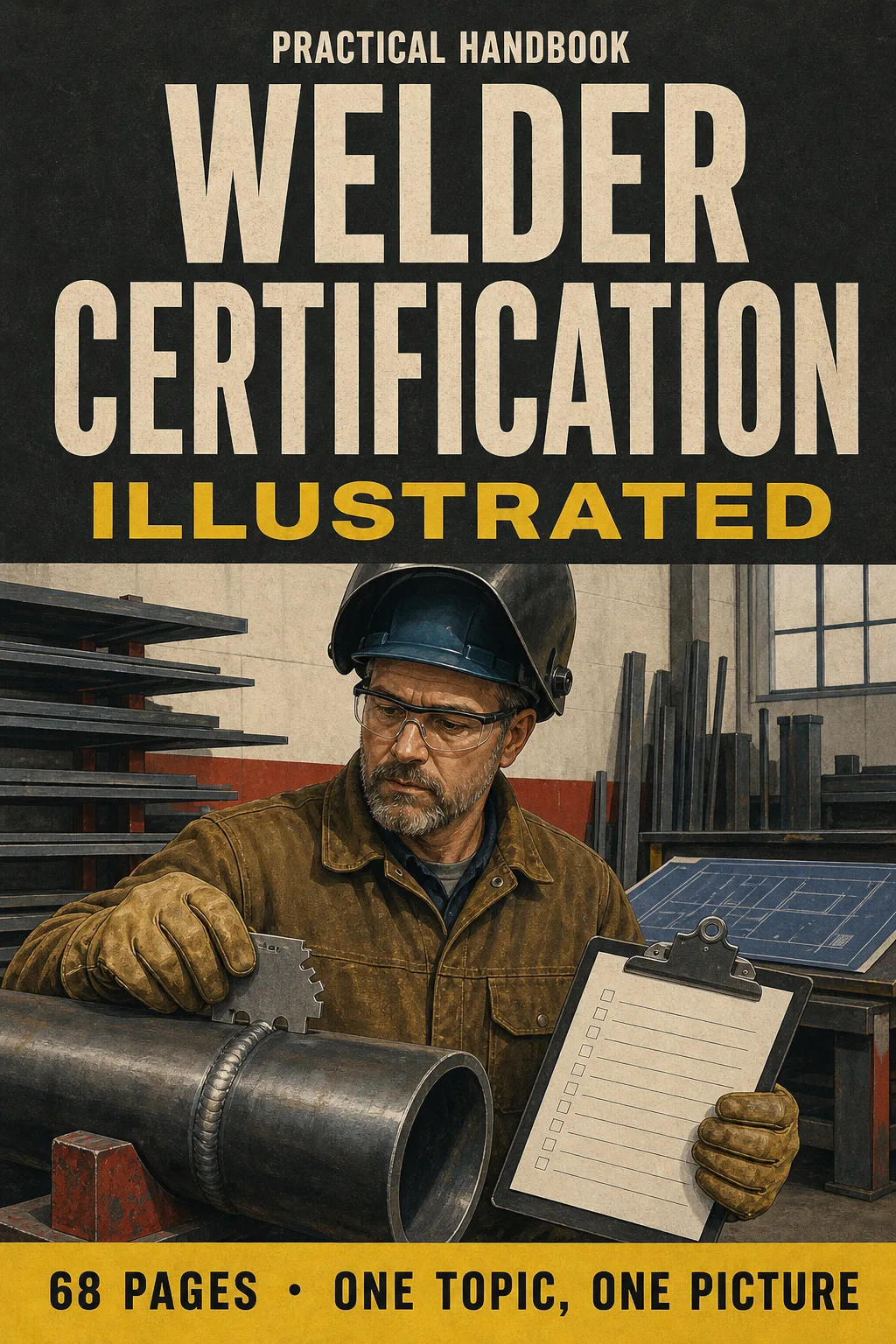
Welder Certification Illustrated: Red Seal Exam Theory in Drawings, in the Same Order Every Time One Topic on Every Page

SMAW, GMAW, FCAW and GTAW, polarity, electrode codes, weld symbols, defects, metallurgy and preheat, oxy-fuel cutting and blueprints. Every topic gets its own page: the drawing first, then what you need to remember. 68 illustrated pages.

START STUDYING THIS WAY

🔒 Secure checkout · PDF by email · 30-day guarantee

Every topic, its own pageEach process, symbol and defect drawn, with the explanation beside it
68 illustrated pages9 parts, from shop safety to the final review
Up-to-date sourcesRed Seal standard for Welder, CSA W59 and CSA W47.1
PDF by emailFormat

Look Inside the Book

Every page has a large drawing and a box with the codes, settings and steps you need to know:

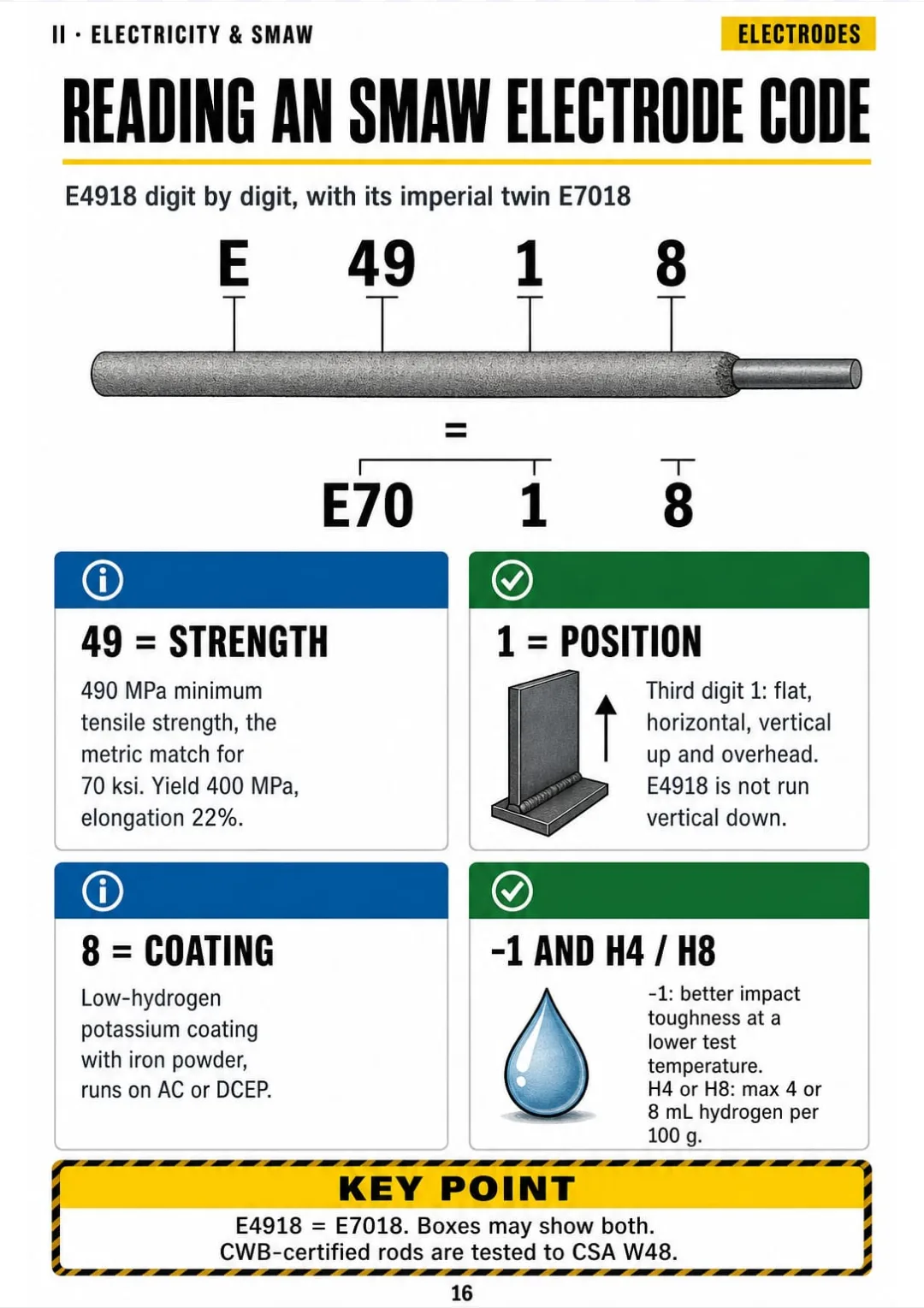
E4918: 490 MPa tensile, all positions, low-hydrogen coating on AC or DCEP.
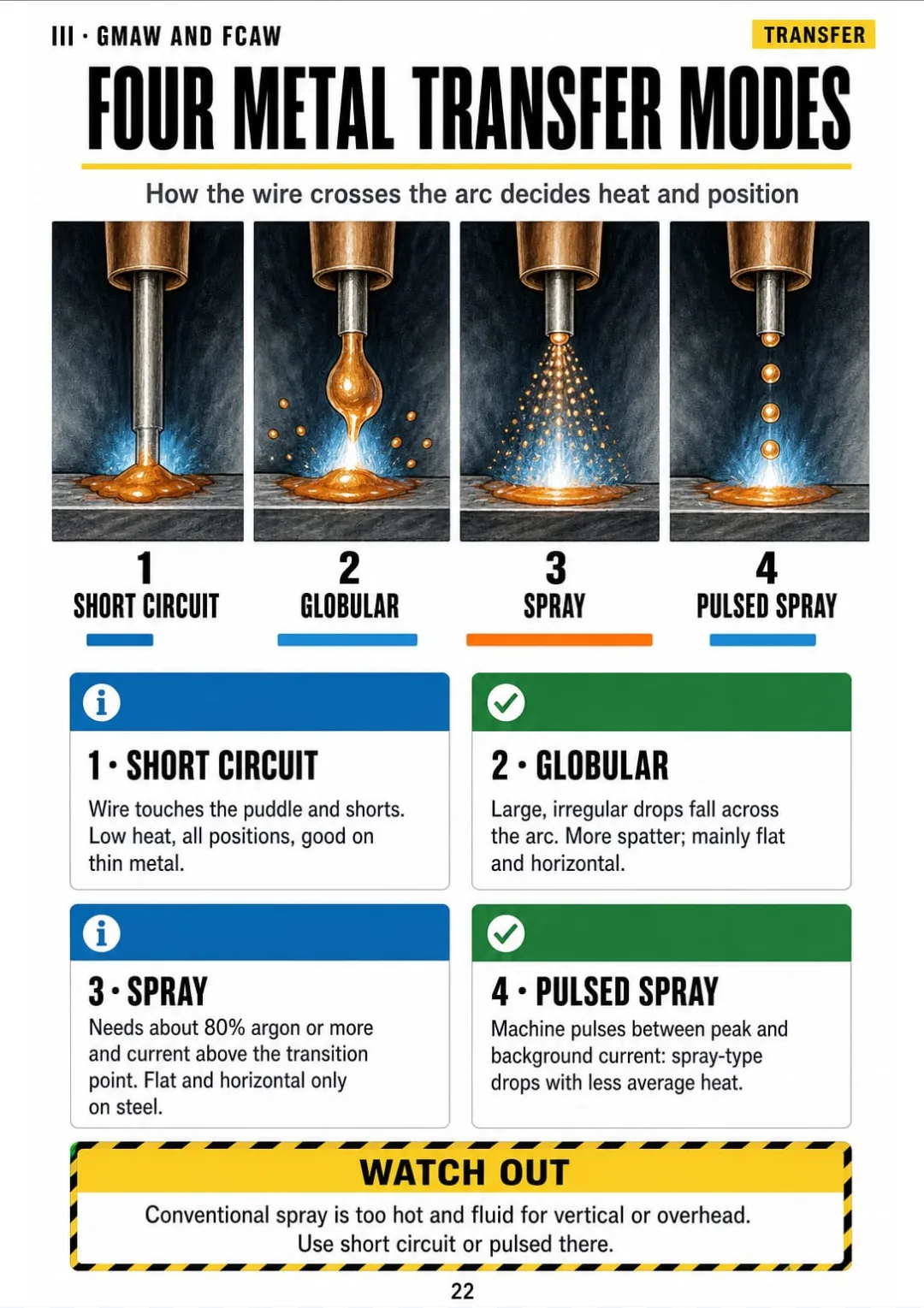
Short circuit, globular, spray (≈80% Ar+, flat/horizontal) and pulsed spray, side by side.
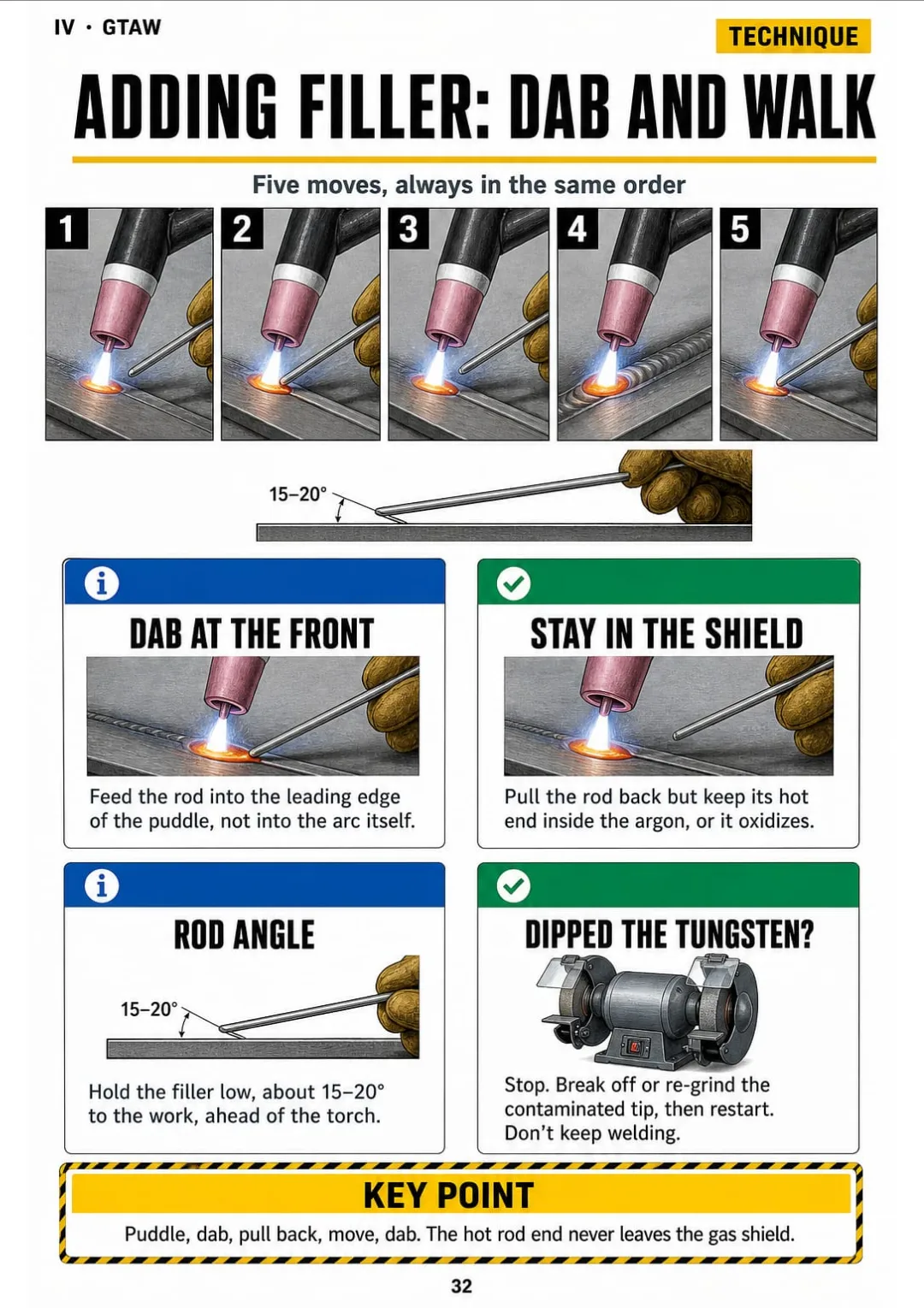
Puddle, dab, pull back, move, dab: filler at about 15–20°, always inside the shield.
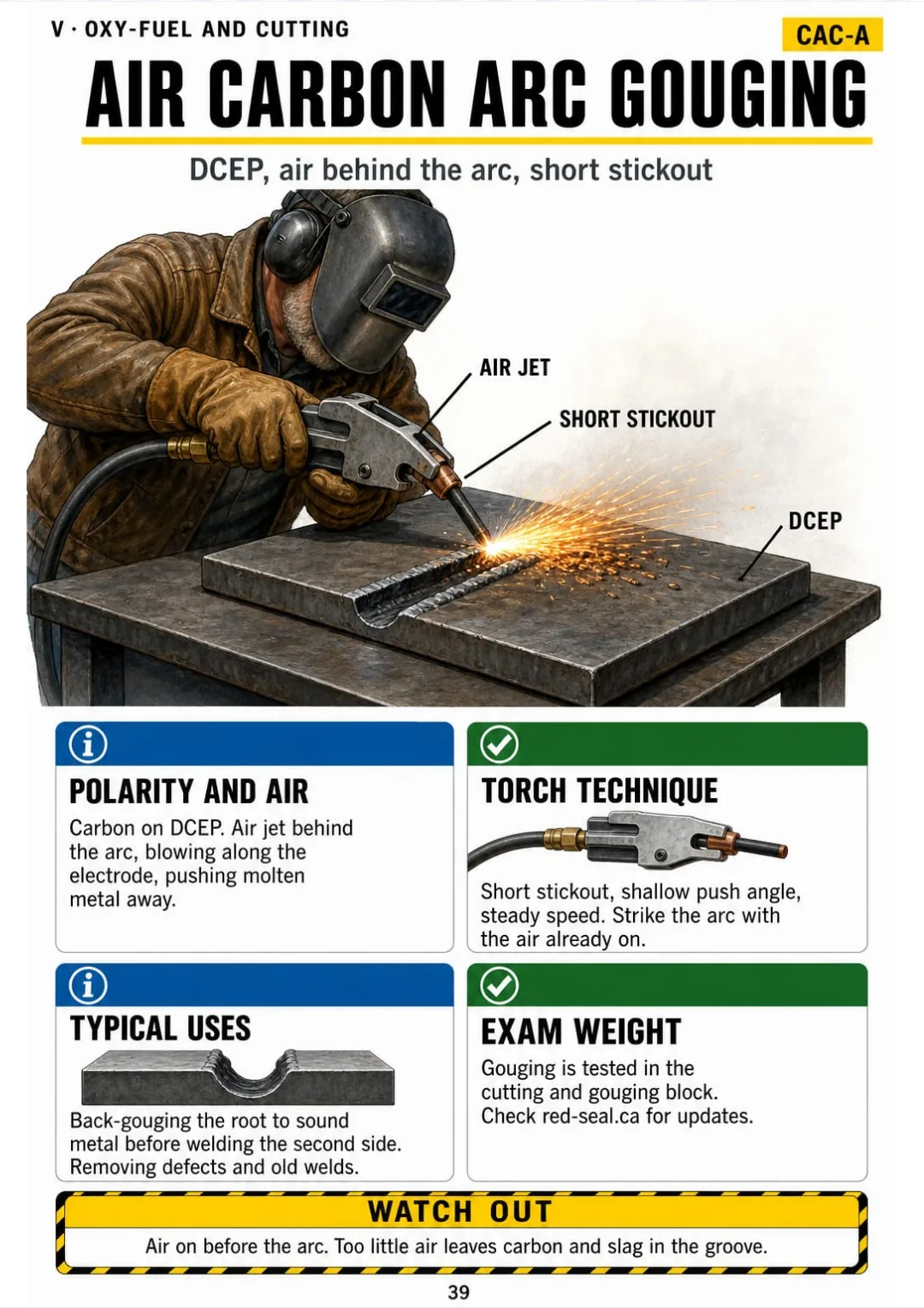
Air carbon arc gouging: DCEP, air jet behind the arc, short stickout. For back-gouging and defect removal.
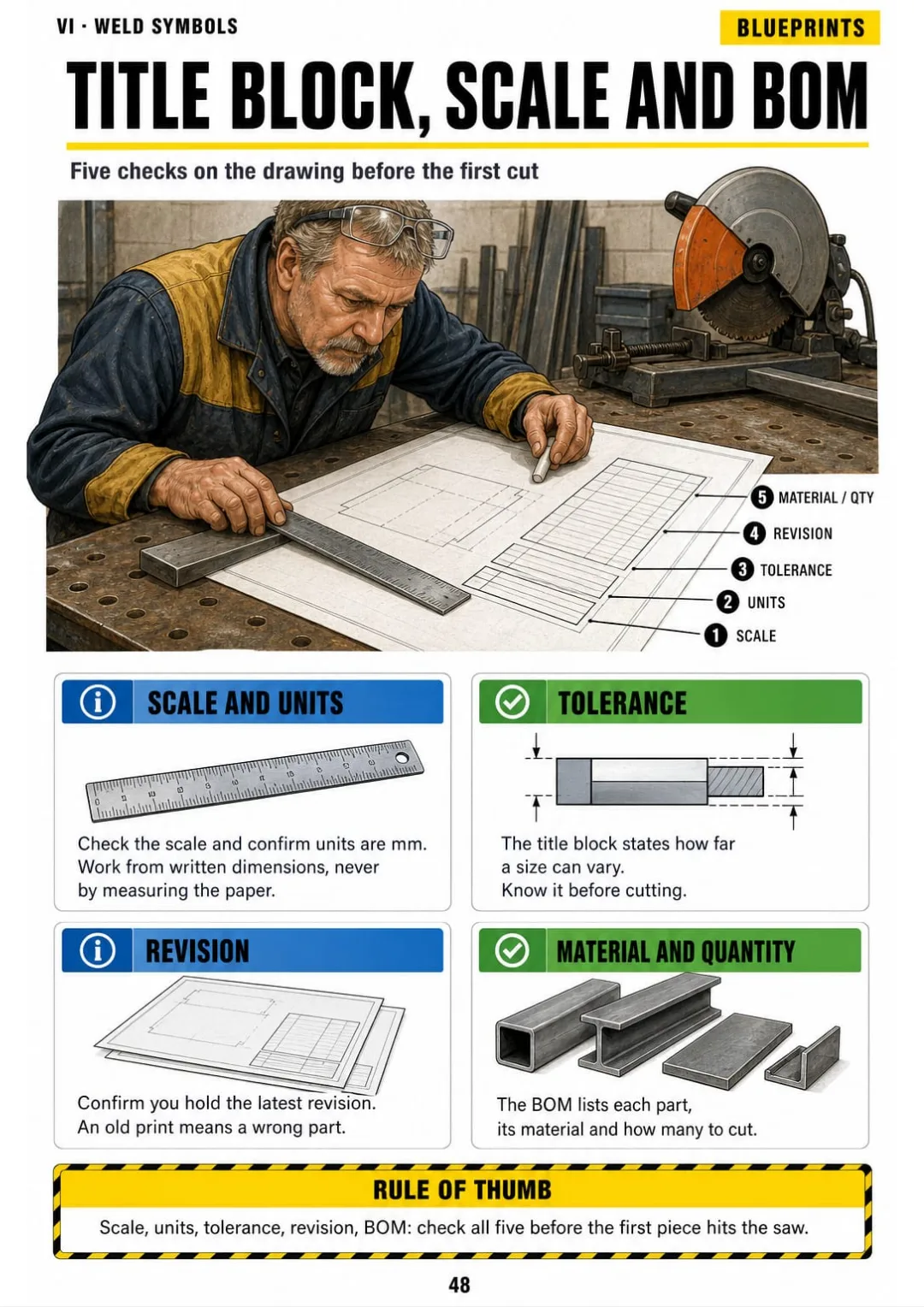
Before cutting: scale, units (mm), tolerance, revision, and material and quantity in the BOM.
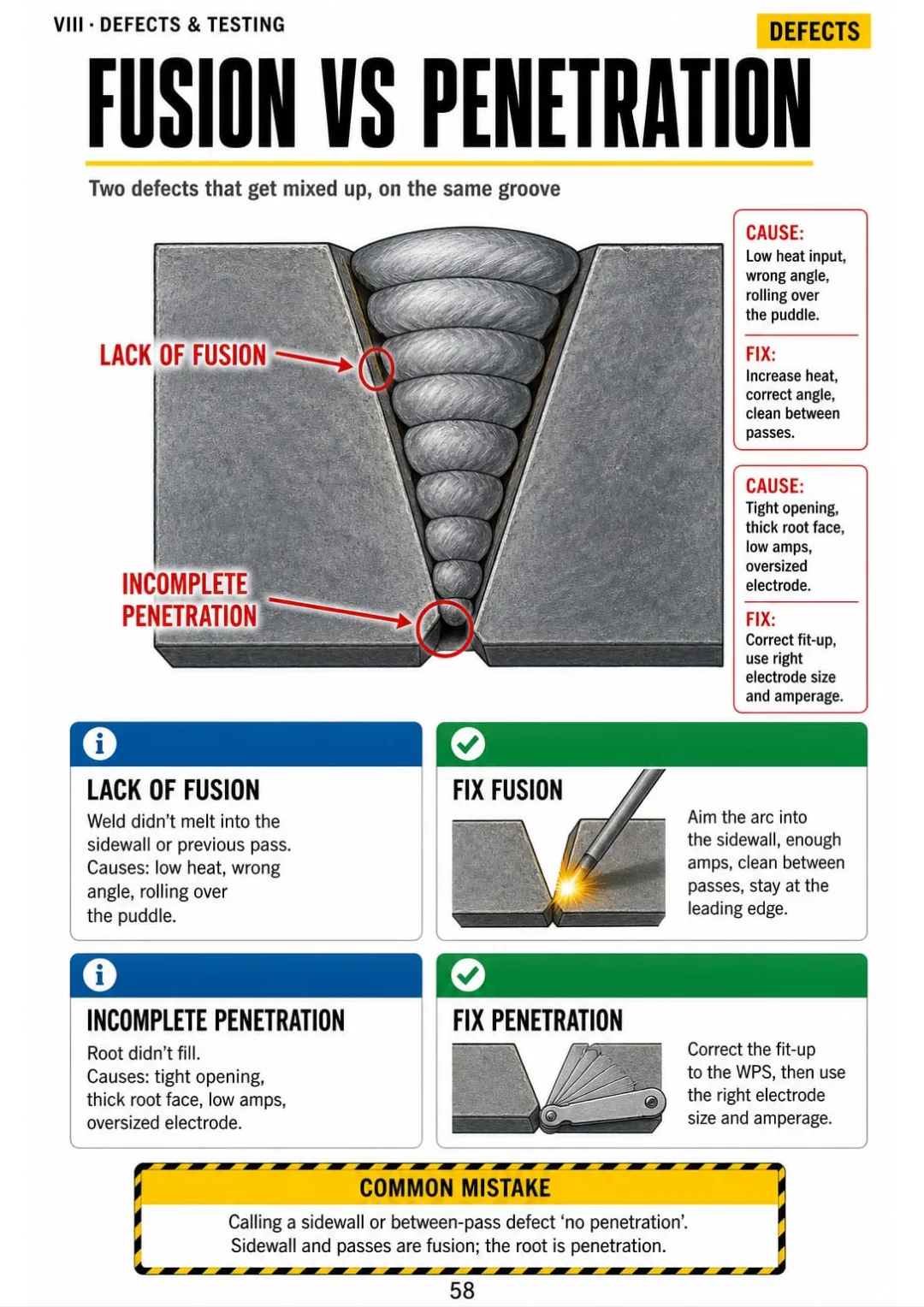
Lack of fusion is at the sidewall or between passes; incomplete penetration is at the root
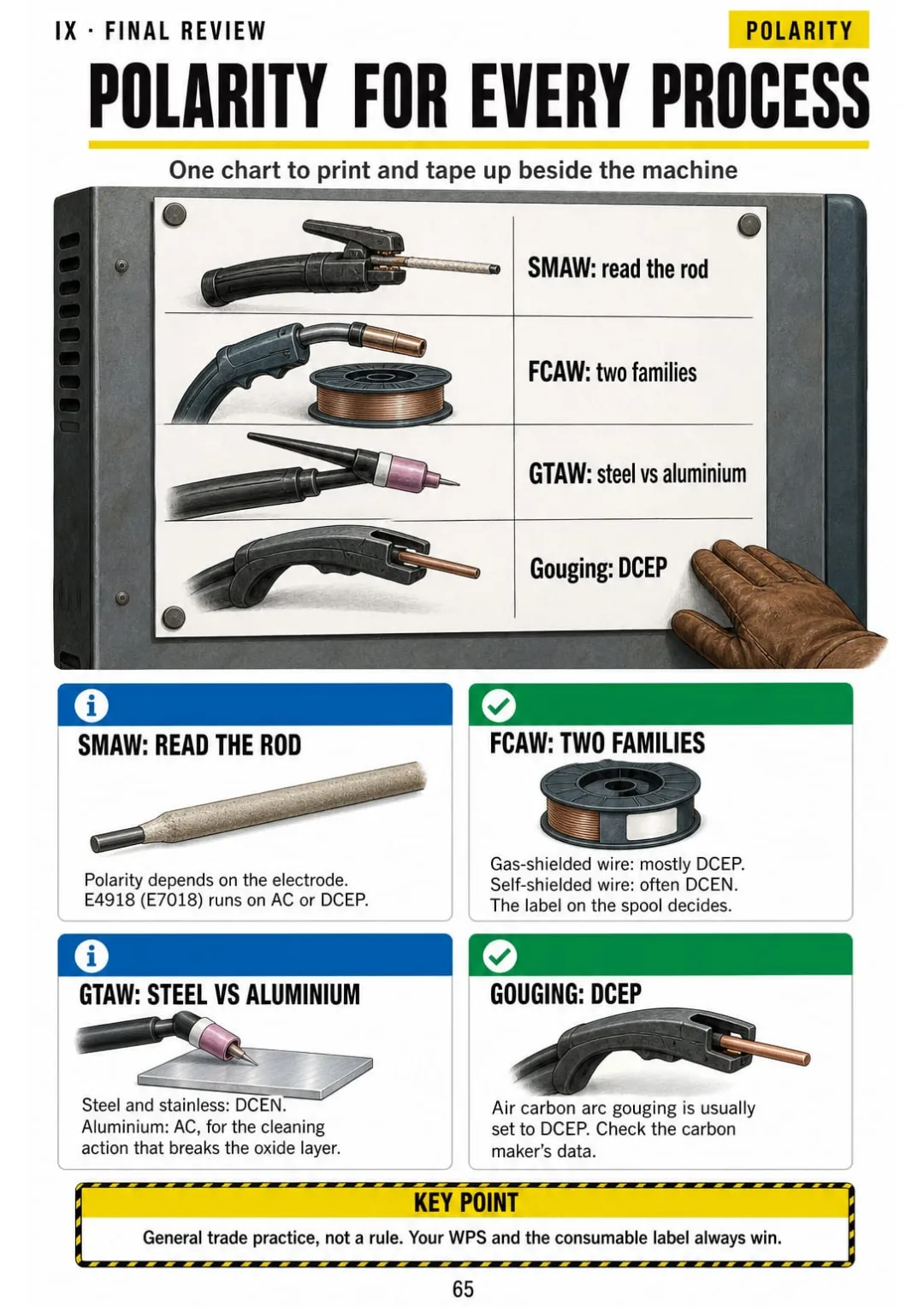
GMAW DCEP · GTAW steel DCEN, aluminium AC · FCAW and SMAW: check the label
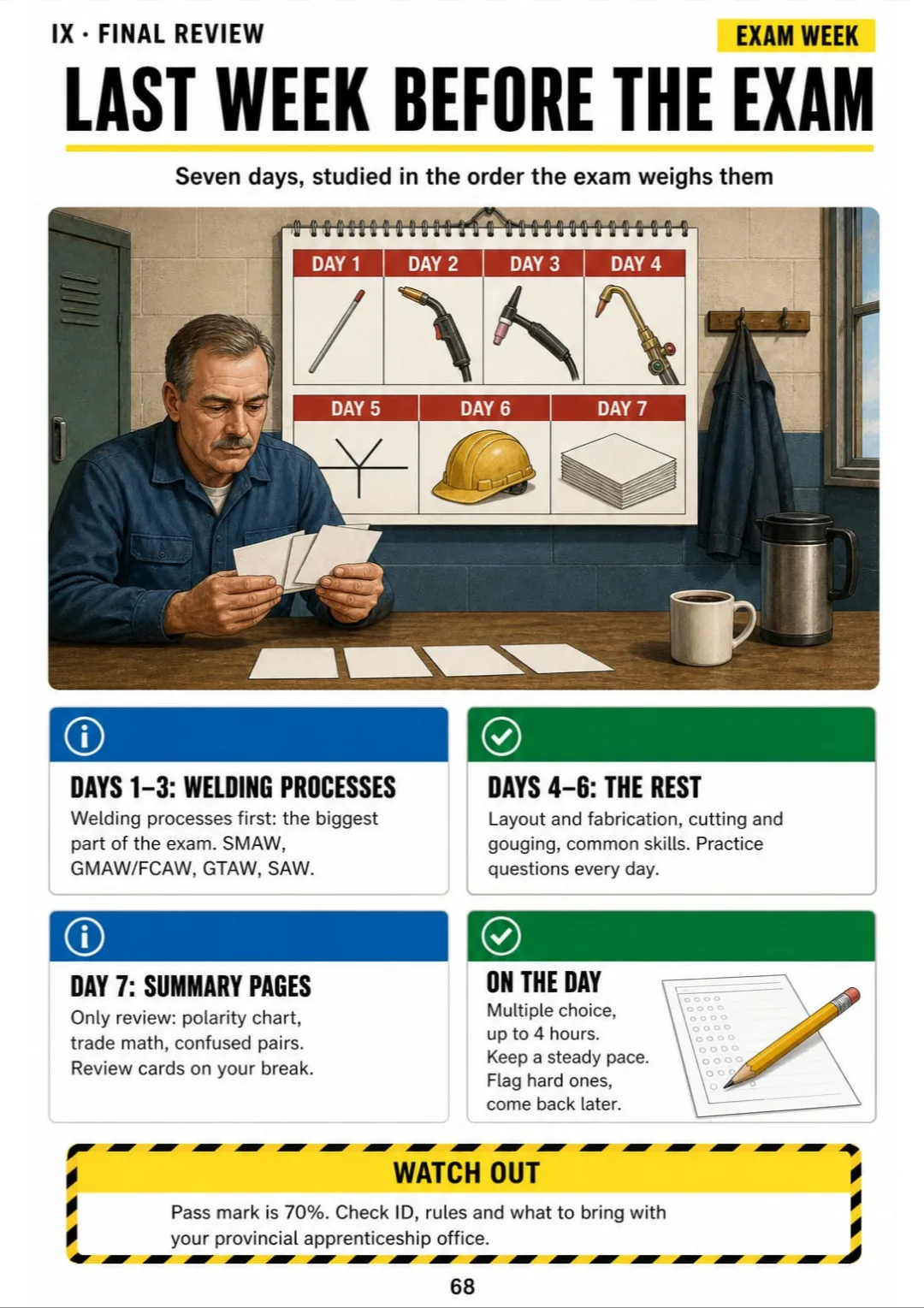
7 days in exam-weight order: D 44% · B 22% · C 18% · A 16% · 70% to pass

Swipe to see more →

These are real pages from the book. The table of contents is the full one: 9 parts and 64 topics.

The Problem Isn't You. It's How It Was Explained.

You're studying GTAW for the written exam and the question asks how filler goes into the puddle, and at what angle. Your hands know it. In words, you can't put it in order.

The manual covers it in two long paragraphs: torch angle, rod angle, gas envelope, puddle formation, all in one block. You read it, close the book, and by morning it's gone.

Puddle, dab, pull back, move, dab: filler at about 15–20°, always inside the shield.

In the book, dab and walk is one page: puddle, dab, pull back, move, dab, drawn step by step, with the rod at about 15–20° and always inside the gas shield.

Same with the electrode code, the four transfer modes, the three flames, arrow side vs other side and fusion vs penetration: each one on its own page.

You look at the drawing, you see the sequence your hands already do, and you answer without going back to the manual.

COMPARE FOR YOURSELF

The Same Topic, Two Ways to Study It

THIS
  • The manual: line after line
  • Transfer modes explained only in words
  • You walk into the exam with doubts
In gas metal arc welding, the mechanism by which molten metal passes from the electrode to the weld pool is determined primarily by current, voltage, wire diameter and shielding gas composition. Short-circuiting transfer occurs at low current and voltage, the electrode contacting the pool repeatedly. Globular transfer occurs at intermediate values and produces large, irregular droplets. Spray transfer requires argon-rich shielding, generally above approximately 80 per cent, and currents above the transition value, and is normally limited to the flat and horizontal positions, whereas pulsed spray alternates peak and background current.
FOR THIS
  • The four transfer modes in one drawing
  • Gas, current and positions in a box
  • You see it and you get it
Short circuit, globular, spray (≈80% Ar+, flat/horizontal) and pulsed spray, side by side.
CONTENTS

Take a Look at the 9 Parts and 64 Topics

The exam and shop safety, electricity and SMAW, GMAW and FCAW, GTAW, oxy-fuel and cutting, weld symbols and blueprints, metallurgy, defects and testing, and a final review: 68 pages, all illustrated

IThe Exam and Shop Safety · pp. 5-11
  1. What the Written Exam Actually Covers
  2. Red Seal Certificate vs Welding Ticket
  3. How to Read a Multiple-Choice Question
  4. Choosing the Right Filter Shade
  5. Fumes, Ventilation and Hexavalent Chromium
  6. Electric Shock, Fire Watch and Confined Spaces
  7. Handling and Storing Gas Cylinders
IIElectricity and SMAW · pp. 12-20
  1. Volts, Amps and the Arc
  2. Constant Current vs Constant Voltage
  3. Polarity: DCEP, DCEN and AC
  4. Duty Cycle and Power Sources
  5. Reading an SMAW Electrode Code
  6. Cellulosic, Rutile and Low-Hydrogen Rods
  7. Storing Low-Hydrogen Electrodes
  8. SMAW Technique: Angle, Arc Length, Speed
  9. Arc Blow and How to Stop It
IIIGMAW and FCAW · pp. 21-27
  1. The GMAW System, Part by Part
  2. Four Metal Transfer Modes
  3. Shielding Gas for GMAW
  4. Stickout, Wire Speed and Voltage
  5. FCAW: Gas-Shielded vs Self-Shielded
  6. Push or Drag?
  7. GMAW Aluminium: Wire and Feeding
IVGTAW · pp. 28-33
  1. The GTAW Torch and Circuit
  2. Polarity for Steel vs Aluminium
  3. Tungsten Colours and Tip Shapes
  4. Argon Flow, Cup Size and Post-Flow
  5. Adding Filler: Dab and Walk
  6. Stainless Steel: Heat and Back-Purge
VOxy-Fuel, Cutting and Gouging · pp. 34-39
  1. Oxy-Fuel Equipment Setup
  2. Lighting, Shutting Down and Backfire
  3. Three Flames and Their Uses
  4. How an Oxy-Fuel Cut Works
  5. Plasma Arc Cutting
  6. Air Carbon Arc Gouging
VIWeld Symbols and Blueprints · pp. 40-48
  1. Anatomy of a Welding Symbol
  2. Arrow Side vs Other Side
  3. Decoding a Fillet Weld Symbol
  4. Groove Weld Symbols
  5. Groove Dimensions: Depth, Size, Angle, Opening
  6. Supplementary Symbols
  7. Intermittent, Chain and Staggered Welds
  8. Orthographic Views and Line Types
  9. Title Block, Scale and Bill of Materials
VIIMetallurgy, Preheat and Distortion · pp. 49-55
  1. Weld Metal, Fusion Line and HAZ
  2. Carbon Content and Weldability
  3. Carbon Equivalent in One Formula
  4. Preheat and Interpass Temperature
  5. Hydrogen Cracking in Three Conditions
  6. Why Metal Distorts
  7. Controlling Distortion
VIIIDefects, Testing and Positions · pp. 56-64
  1. Porosity: Look, Cause, Fix
  2. Undercut and Overlap
  3. Incomplete Fusion vs Incomplete Penetration
  4. Slag Inclusions
  5. Cracks: Hot, Cold and Crater
  6. Visual Inspection and Gauges
  7. Bend Tests and NDT
  8. Welding Positions: Plate and Pipe
  9. Pipe Joint Preparation
IXFinal Review · pp. 65-68
  1. Polarity for Every Process, on One Page
  2. Trade Math You Need for the Exam
  3. The Most Commonly Confused Pairs
  4. Last Week Before the Exam

One Page, One Topic, All Clear

Think of it this way:

You're on your lunch break with ten minutes left, and you want to check which polarity goes with which process before tonight's practice questions.

You open the page and it's all there: GMAW on DCEP, GTAW on DCEN for steel and AC for aluminum, and a note to check the label for FCAW and SMAW.

Before cutting: scale, units (mm), tolerance, revision, and material and quantity in the BOM.

Same with the electrode code, the fillet symbol, the three flames, hydrogen cracking and pipe positions: each one has its own page.

Welder Certification Illustrated is 9 parts and 68 illustrated pages, one topic per page, with a final review of trade math and the most commonly confused pairs.

What you see drawn, you don't have to memorize.

What's Inside Welder Certification Illustrated:

Ipp. 5-11

The Exam and Shop Safety

What the written exam covers, Red Seal vs ticket, filter shades, fumes, shock, fire watch and gas cylinders

IIpp. 12-20

Electricity and SMAW

Volts and amps, CC vs CV, DCEP, DCEN and AC, duty cycle, electrode codes, rod types, low-hydrogen storage, technique and arc blow

IIIpp. 21-27

GMAW and FCAW

The GMAW system part by part, four transfer modes, shielding gas, stickout, gas-shielded vs self-shielded FCAW, push or drag, aluminum wire

IVpp. 28-33

GTAW

Torch and circuit, polarity for steel and aluminum, tungsten colours and tips, argon flow and post-flow, dab and walk, stainless and back-purge

Vpp. 34-39

Oxy-Fuel, Cutting and Gouging

Oxy-fuel setup, lighting and backfire, three flames, how a cut works, plasma cutting and air carbon arc gouging

VIpp. 40-48

Weld Symbols and Blueprints

Anatomy of the symbol, arrow side vs other side, fillet and groove symbols, dimensions, supplementary symbols, views, title block and bill of materials

VIIpp. 49-55

Metallurgy, Preheat and Distortion

Weld metal and HAZ, carbon and weldability, carbon equivalent, preheat and interpass, hydrogen cracking and distortion control

VIIIpp. 56-64

Defects, Testing and Positions

Porosity, undercut, fusion vs penetration, slag, cracks, visual inspection, bend tests and NDT, plate and pipe positions, pipe joint prep

IXpp. 65-68

Final Review

Polarity for every process on one page, trade math, the most commonly confused pairs and the last week before the exam

At the end of the book: A final review with polarity for every process on one page, trade math and the most commonly confused pairs.
Plus: 2 Free Books

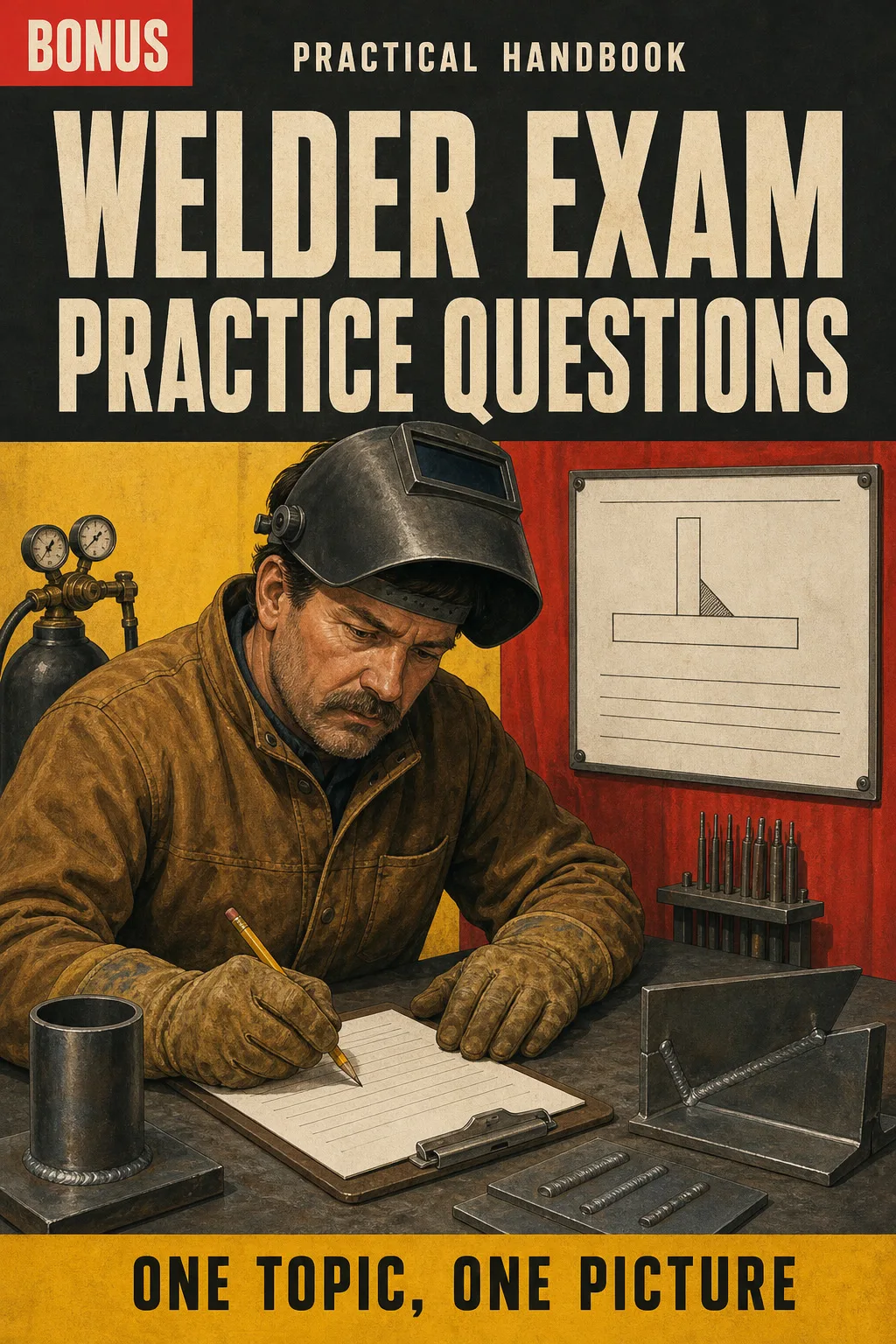
Welder Exam Practice Questions

BONUS 1: «Welder Exam Practice Questions»

Value on its own: US$ 17.90

Practise with multiple-choice questions in the style of the trade exam, each answer explained with a drawing, so you know where you stand before exam day.

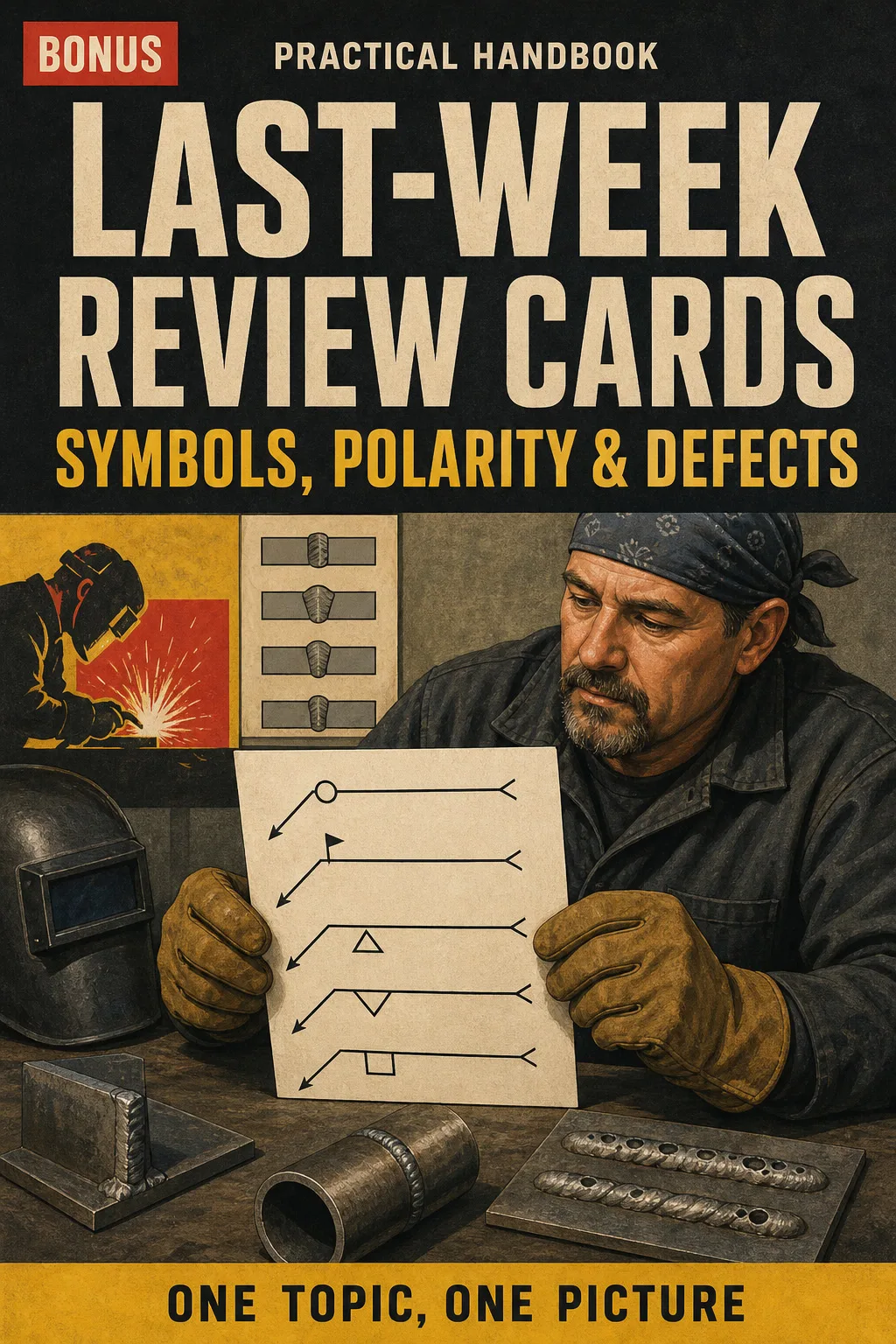
Last-Week Review Cards: Symbols, Polarity & Defects

BONUS 2: «Last-Week Review Cards: Symbols, Polarity & Defects»

Value on its own: US$ 14.90

The facts that are easiest to mix up, on quick cards you can print and review in 10 minutes on your break.

Welder Certification Illustrated with 2 Free Books

  • Welder Certification Illustrated: 68 illustrated pagesUS$ 63
  • BONUS 1: Welder Exam Practice QuestionsUS$ 17.90
  • BONUS 2: Last-Week Review Cards: Symbols, Polarity & DefectsUS$ 14.90
  • High-resolution PDF to printIncluded
Total value US$ 95.80
YOUR PRICE:
US$ 27
You save US$ 68.80
YES, I WANT WELDER CERTIFICATION ILLUSTRATED FOR US$ 27

📄 This is a digital PDF book sent to your email: nothing is printed or shipped.

Secure purchaseEncrypted payment30-day guarantee

PDF by email: We email you Welder Certification Illustrated as a PDF, together with the two free books. It's a single payment: no installments, no extra charges.

Who This Book Is For

You're working through your apprenticeship levels

You're working through your apprenticeship levels

Each block of theory from school has its own drawn page, so what you see in class is easy to find and review at home.

Your exam date is set

Your exam date is set

Polarity, symbols, defects and preheat in the same order on every page, ready to review in ten minutes on a break.

You've welded for years, here or abroad

You've welded for years, here or abroad

You already know the work. The book puts the theory, the metric units and the Canadian terms next to what your hands do.

Everything You Get Today

US$ 95.80US$ 27
YES, I WANT WELDER CERTIFICATION ILLUSTRATED FOR US$ 27

📄 This is a digital PDF book sent to your email: nothing is printed or shipped.

30DAYS
GUARANTEE

30-Day Guarantee

Try Welder Certification Illustrated for 30 days, bonus books included.

We refund everything if the file won't open, if the book isn't what you see here, if you were charged twice or if the email doesn't arrive. Just email us.

You pay once. No subscriptions.

Frequently Asked Questions

Is it for me if I've been welding for years but never wrote the exam?

Yes. It doesn't teach you to weld. It takes the theory the written exam asks about, the part your course manual covers in long paragraphs and YouTube covers in ten different ways, and gives each topic one drawn page, always in the same order, in metric units and with Canadian terms. It's not a beginner book: it starts from what you already do in the shop.

Is it for the Canadian exam, or generic from another country?

Canadian. It follows the Red Seal Occupational Standard for Welder and its exam breakdown, in metric units, with the standards the trade works to here (CSA W59, W47.1, W48, W117.2) and WHMIS 2015. If your province writes its own welder exam, compare the index on this page with the topic list from your apprenticeship office. Standards get updated, so the book tells you which edition each number comes from.

Is this official material? Does it give me a certificate?

No to both. It's an independent illustrated study book, not affiliated with or endorsed by the Red Seal Program, CSA Group or any provincial apprenticeship authority. Your certificate comes only from writing and passing your exam.

Does it replace my technical training?

No. It's a study and review aid. It doesn't replace your apprenticeship, your school hours, shop instruction or your workplace safety rules.

Are the practice questions the ones on the exam?

No. They are written for this book, in the multiple-choice style of the trade exam, each with its answer explained. They are not official exam questions.

When and how do I get it?

As a PDF by email, to the address you enter at checkout.

Do I have to pay every month?

No. It's a one-time payment. No subscription.

Can I have it on paper?

Yes. The PDF is made to print, so you can keep the pages you need in your toolbox or truck.

How does the refund work?

You have 30 days. We refund everything if the file won't open, if the book isn't what you see on this page, if you were charged twice or if the email doesn't arrive: just email us.

Before You Close This Page

No more rereading with nothing to show for it.

Polarity, symbols and defects: you see them drawn, and that's it.

You walk into the exam knowing where everything is.

Drawings make studying faster.

The book is right below.

One-time payment: US$ 27 · Guarantee: 30 days · PDF by email

YES, I WANT WELDER CERTIFICATION ILLUSTRATED FOR US$ 27

📄 This is a digital PDF book sent to your email: nothing is printed or shipped.